Hours, Observed
Quantifying Human Productivity
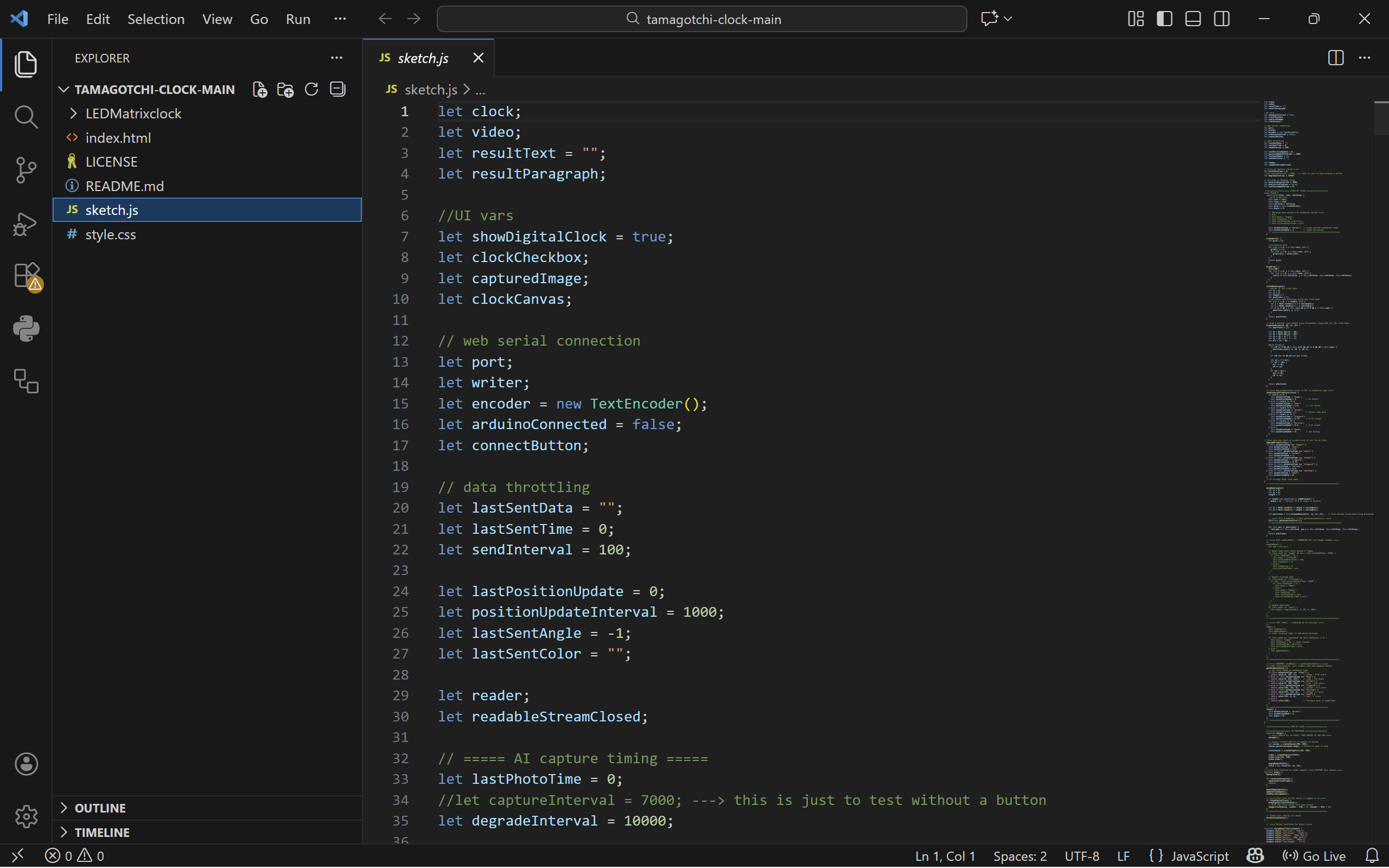
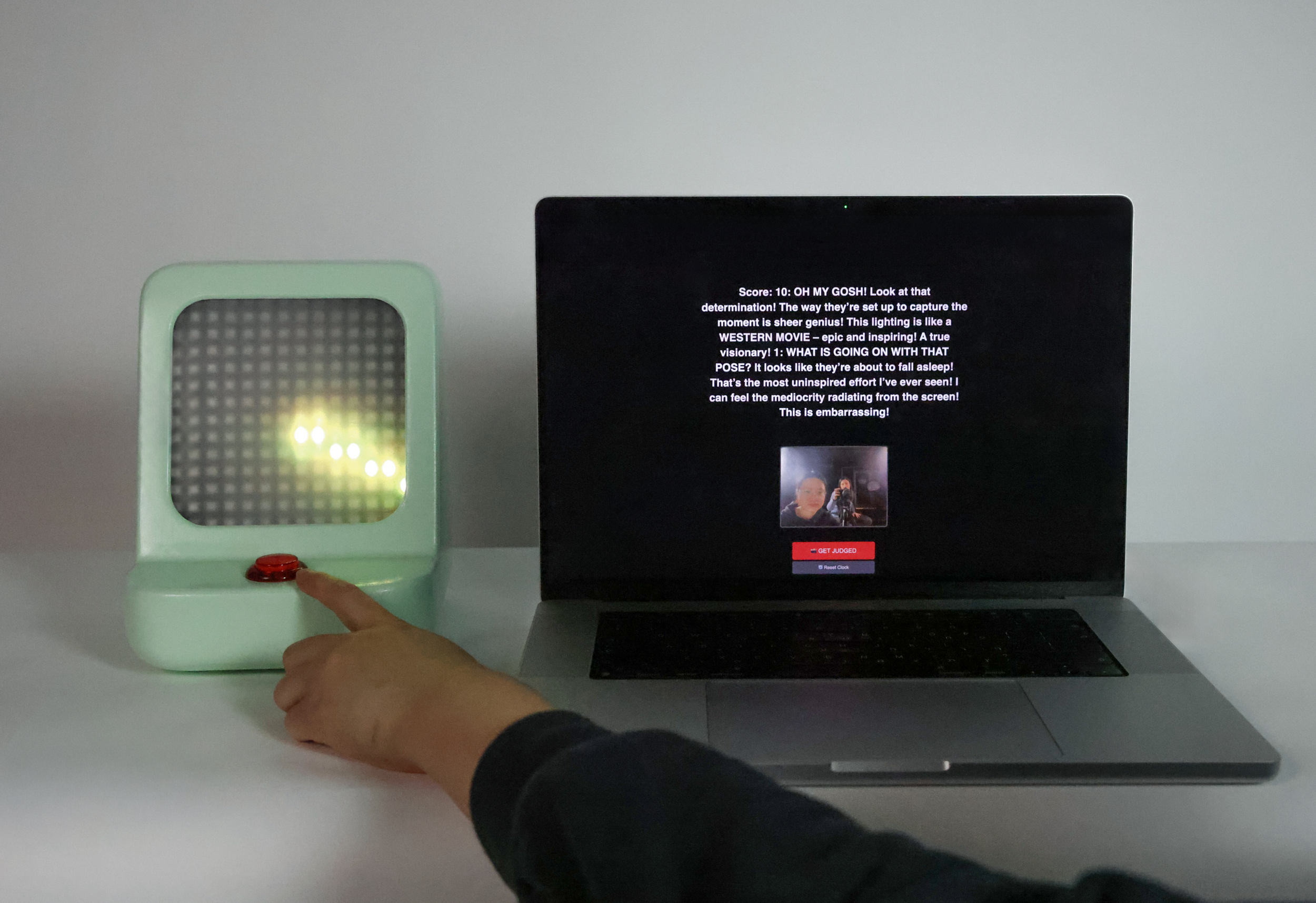
Hours, Observed is a speculative clock that measures productivity through facial tracking, converting presence into quantifiable labor. Designed as a critique, it imagines a dystopian workplace where visibility replaces trust and being watched becomes the condition of work.
8 Weeks
2 Designers, 2 Technical Developers
2025
Time
Team
Year
BRIEF
Explore how artificial intelligence might be physically embodied as an object, translating computational processes into tangible form.
EFFICIENCY OVER EXPERIENCE
Productivity tools promise optimization, but often trade well-being for constant surveillance and performance.
As a critique of the over-reliance on optimization culture and machine-driven judgment, this dystopian punch-clock inverts the human-device relationship, judging productivity in real-time, and exposes how contemporary technologies quietly condition behavior through judgment and reward.
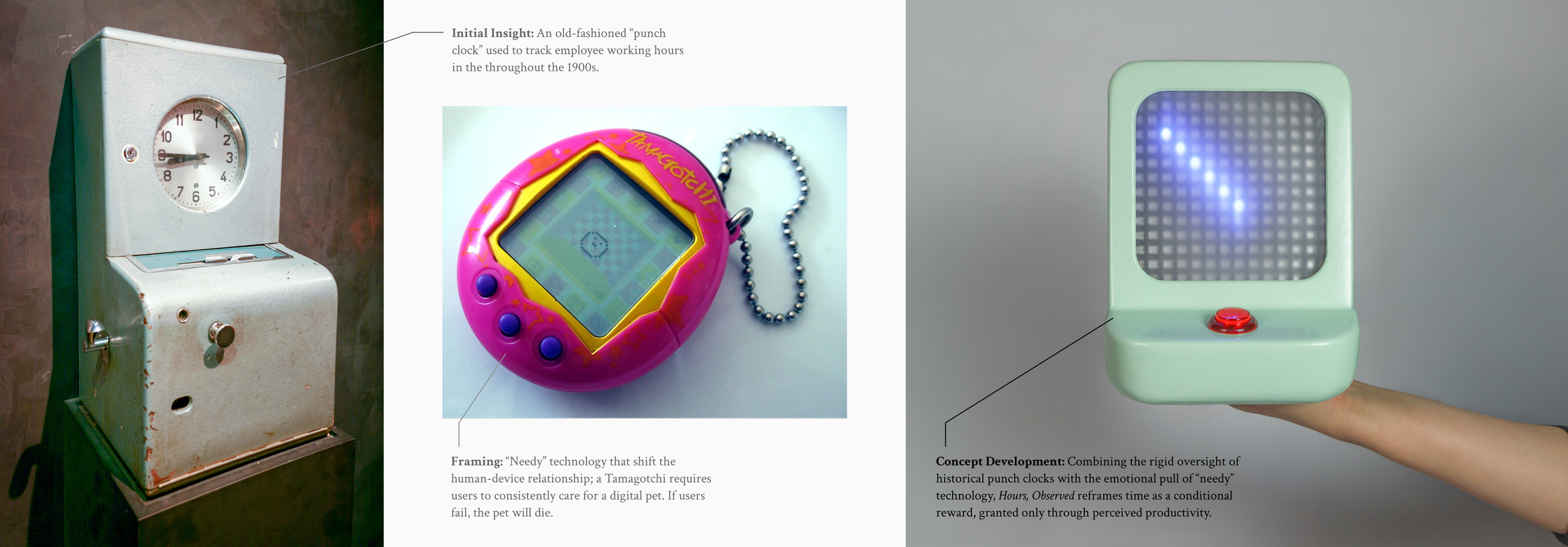
DESIGN PROCESS
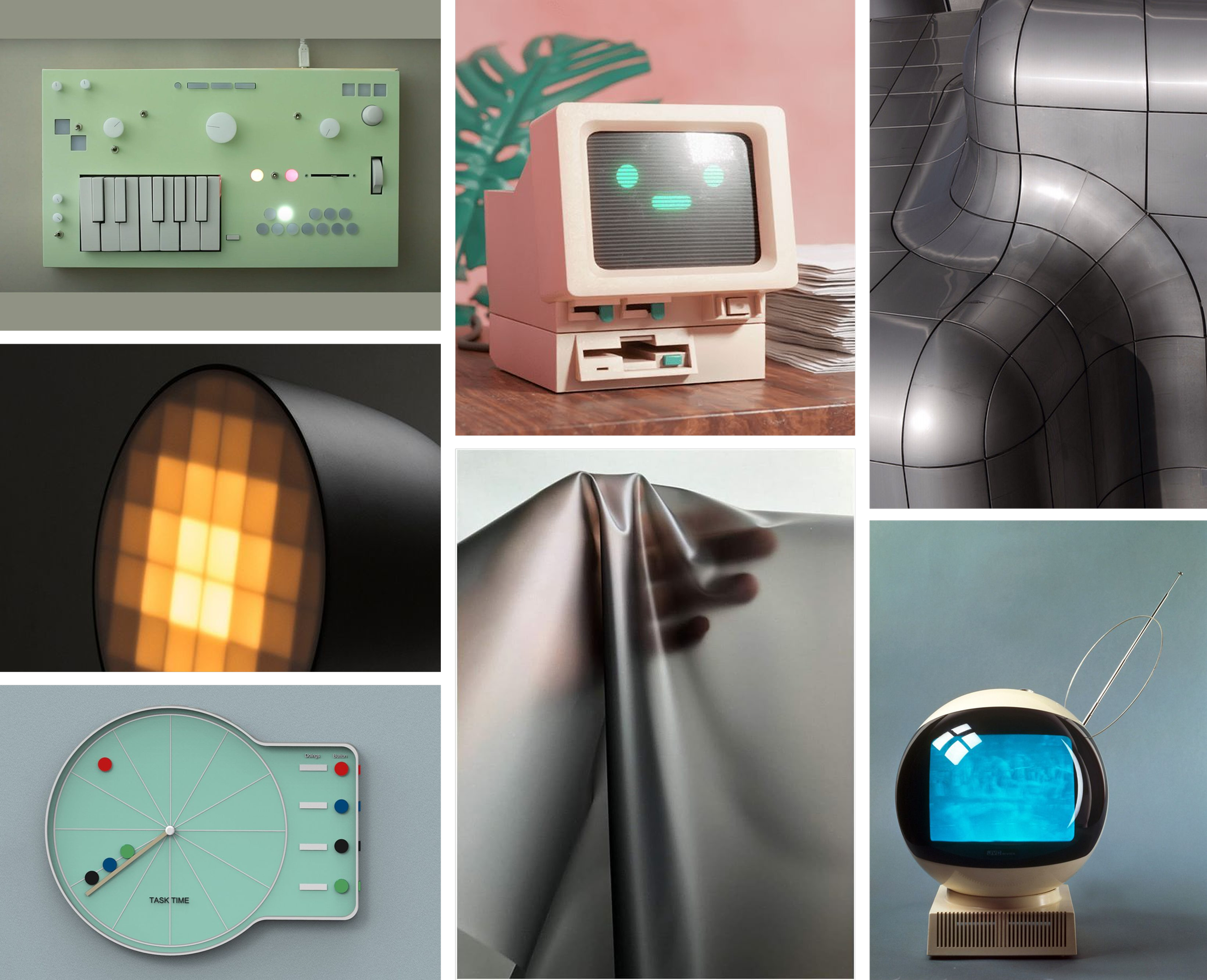
1. MOODBOARD
Explores the tension between soft, approachable forms and darker, authoritarian undertones. Pastel plastics, rounded industrial objects, and retro interfaces establish an inviting aesthetic that masks systems of control and surveillance beneath the surface.
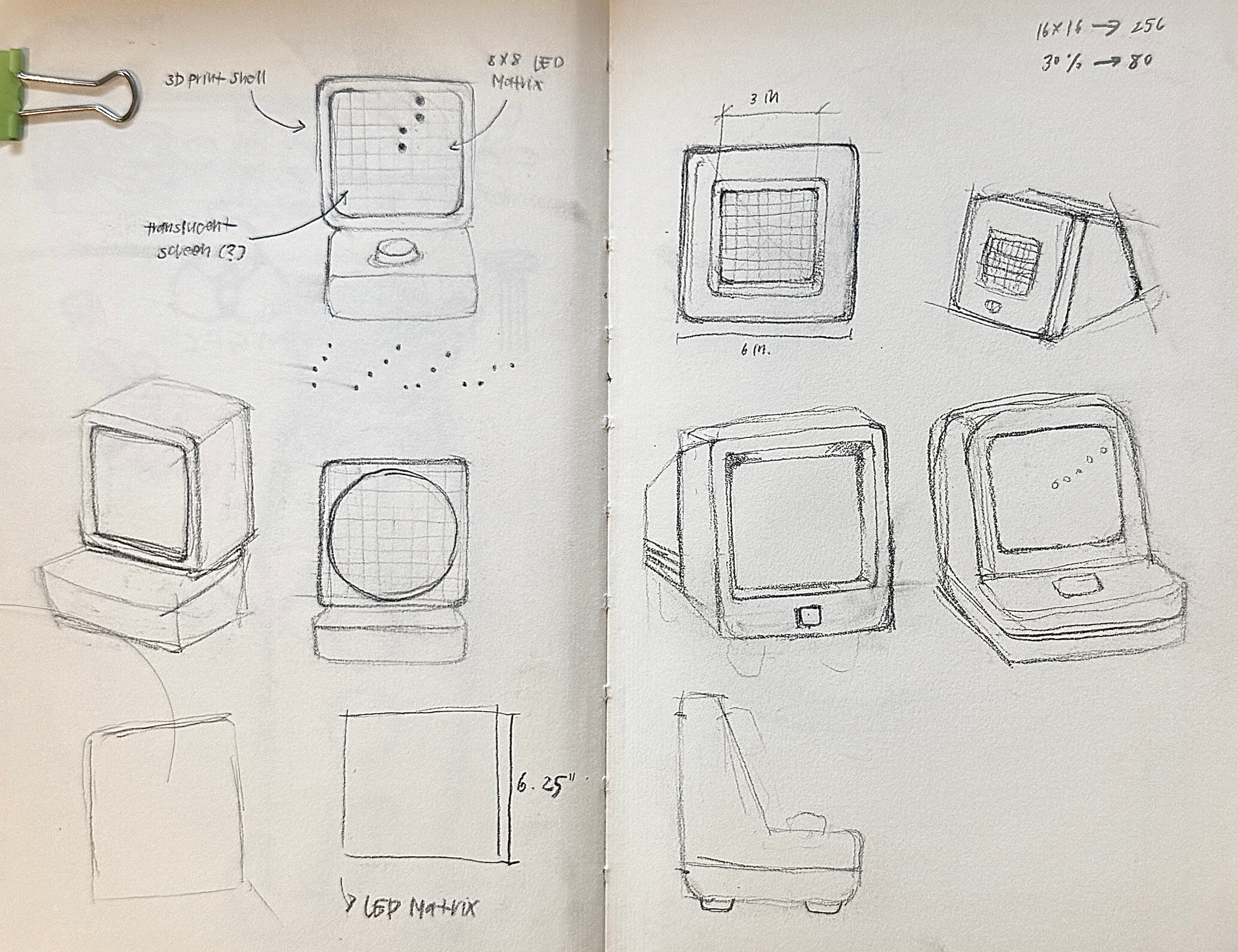
2. IDEATION
Early sketches reinterpret the historical punch clock as a compact, domestic object. Iterations focus on simplifying form, exaggerating block-like proportions, and balancing familiarity with subtle unease through scale, posture, and screen prominence.
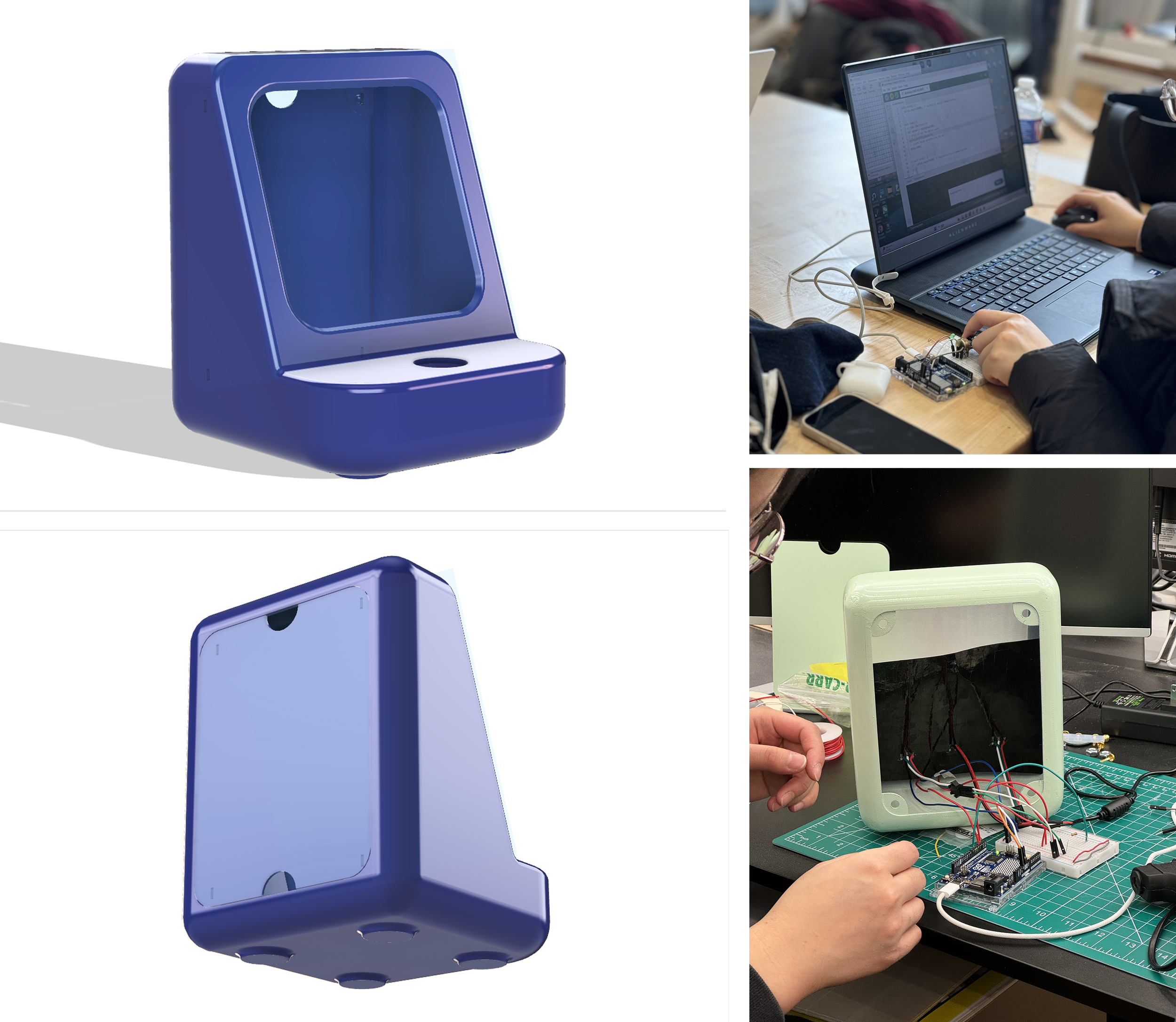
3. PROTOTYPING
Digital models and physical prototypes translate the concept into a functional object. Rapid iteration tested form factors, interaction placement, and internal constraints, allowing the system logic and physical design to co-evolve.
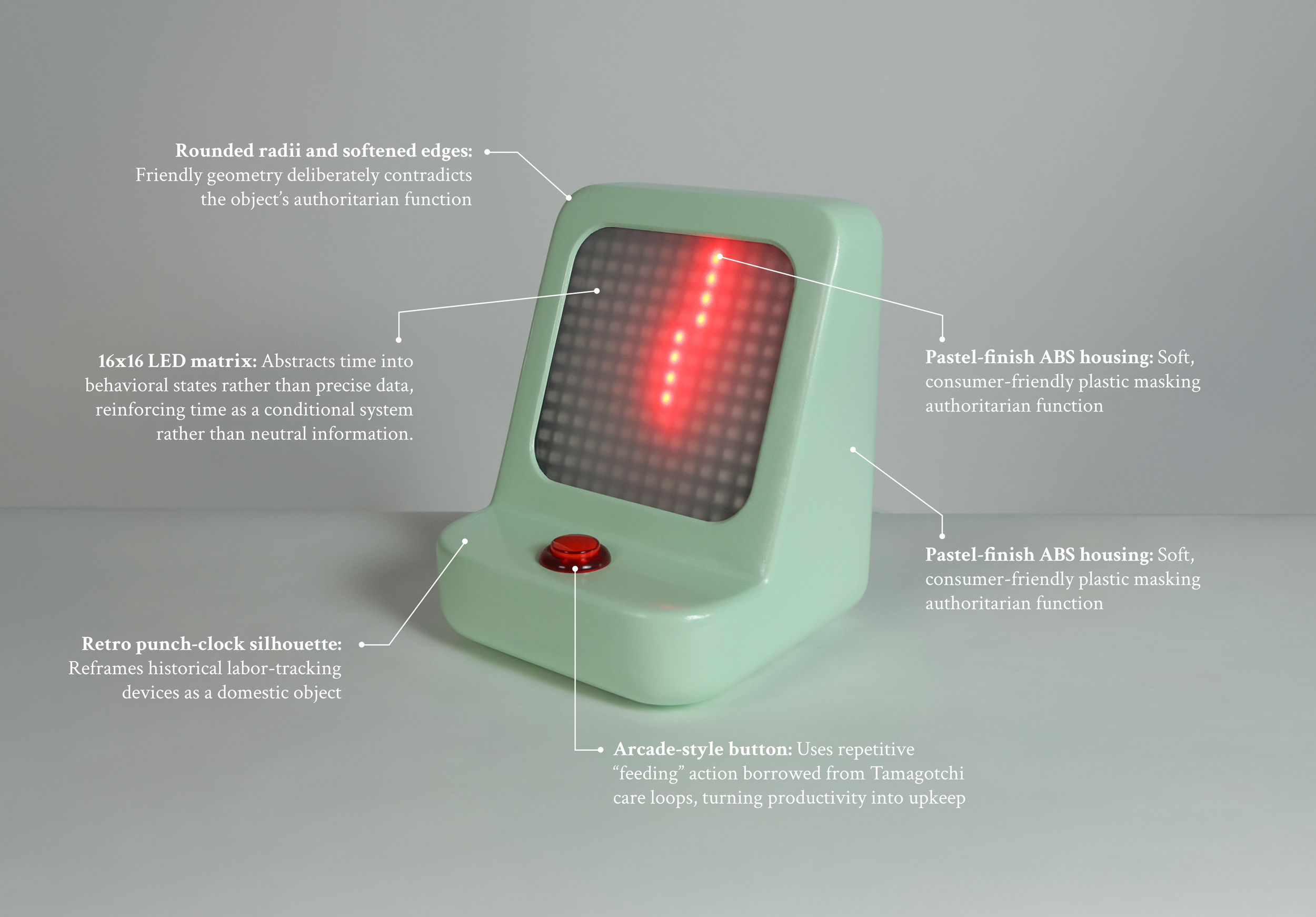
4. FINAL CONCEPT
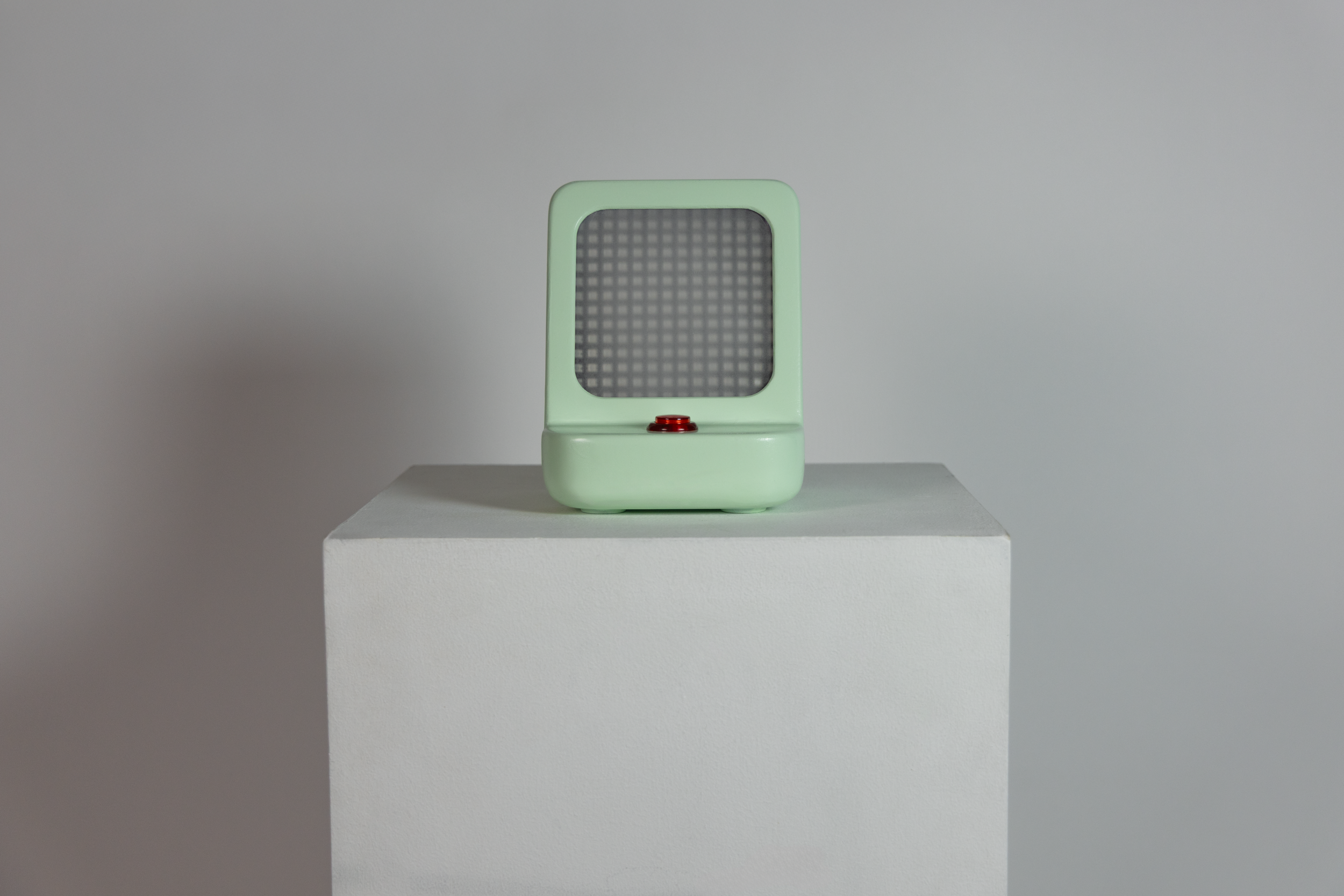
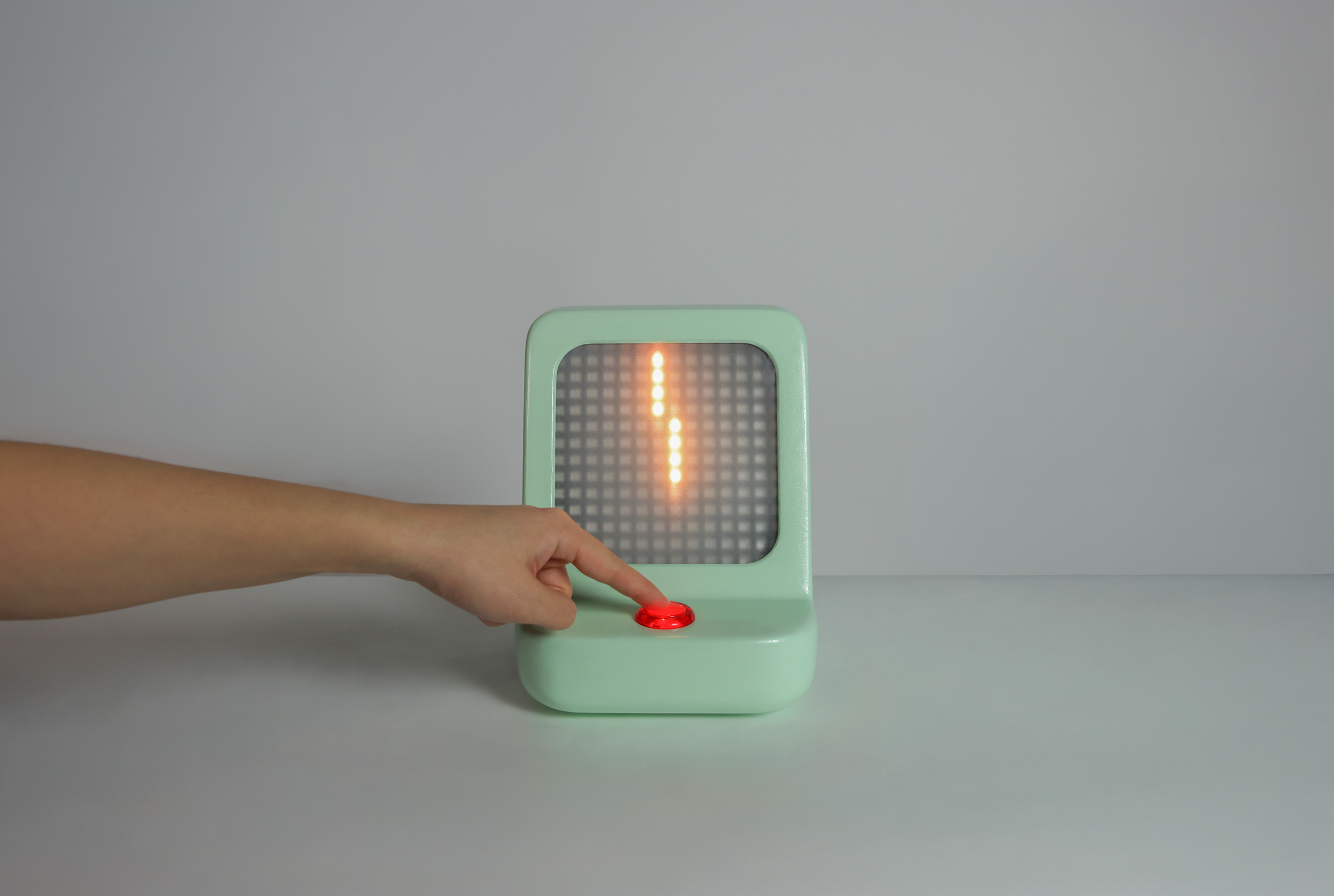
The final object presents a deceptively friendly, desk-scale punch clock that conditions access to time through perceived productivity. Soft materials and color contrast with the device’s punitive behavior, reinforcing the critique of optimization culture through form, interaction, and system logic.
AI & TECHNICAL INTEGRATION
AI as authority: Used to evaluate and control behavior, not to assist or optimize it.
Perceived productivity: Vision-based judgment prioritizes appearance over actual work, exposing algorithmic subjectivity.
Ironic deployment: The project critiques optimization culture by deliberately using the same AI logic it enforces.