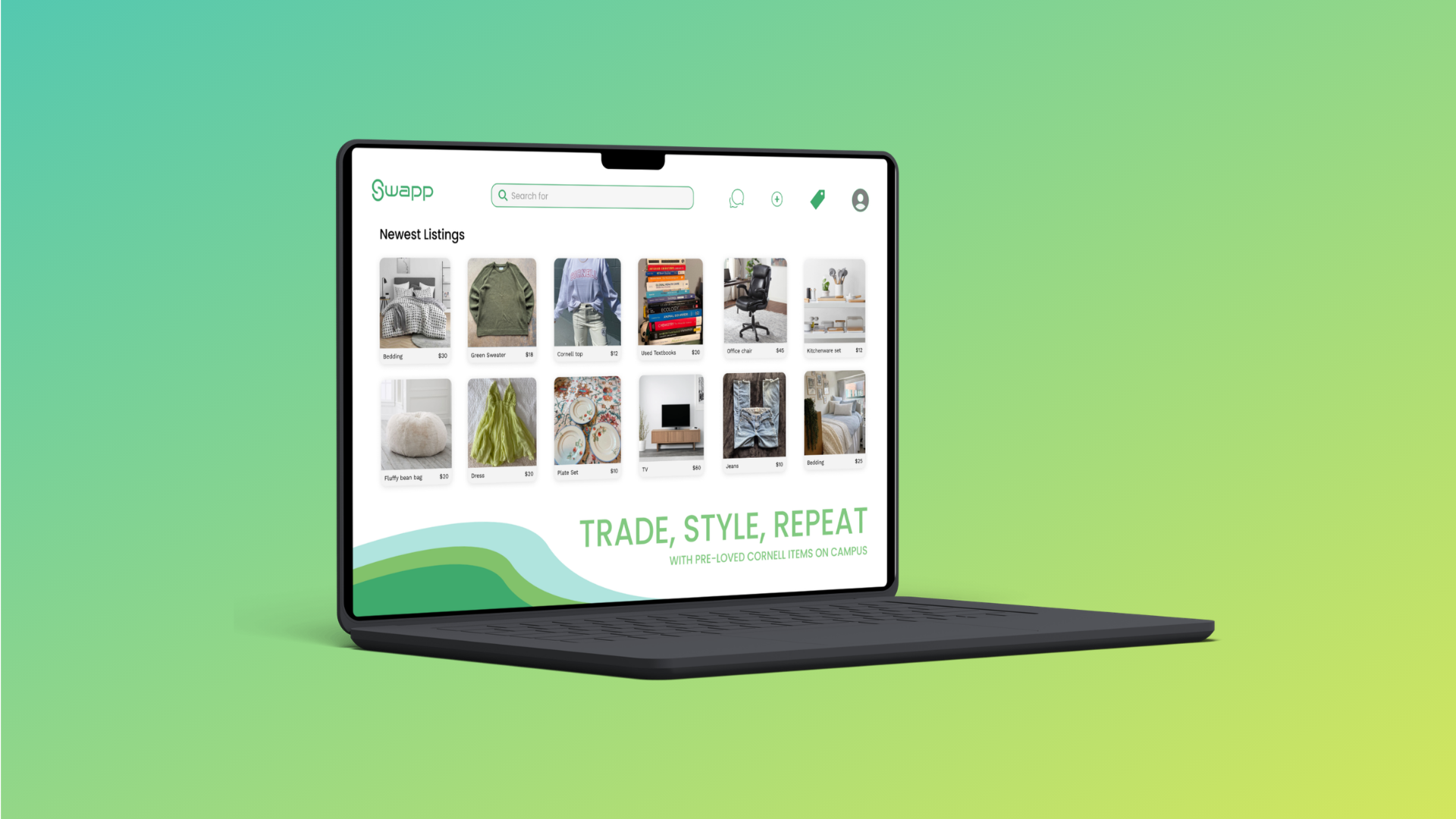
SWAPP
Designing a Circular Economy Platform for Cornell Students
SWAPP is a campus-based resale platform designed to make sustainable exchange seamless for Cornell students. As move-outs generate significant waste each semester, the platform reimagines how pre-loved items can circulate within a closed campus community. This project explores how thoughtful UX design, trust-building systems, and streamlined workflows can reduce friction in peer-to-peer transactions, creating a marketplace that is both intuitive and aligned with circular economy principles.
Time
Team
Year
10 Weeks
3 Designers, 3 Developers
2025
OVERVIEW
As part of Alternative Recycling Cornell, I served as the UI/UX Lead of SWAPP, a campus resale platform designed to facilitate peer-to-peer exchange of pre-loved items. The project began as a strategic reassessment of an underperforming mobile app, with the goal of improving adoption and usability while strengthening alignment with Cornell’s circular economy initiatives.
Leading a cross-functional team of three designers and three developers, I directed user research, guided the product pivot from a mobile app to a web-based platform, and established a cohesive visual and interaction system to support scalable development. My focus centered on reducing friction in the listing and purchasing experience, designing for trust within a closed campus ecosystem, and creating structured handoff documentation to streamline collaboration and implementation.
THE PROBLEM
Reimagining a campus resale to make sustainable consumption intuitive, trustworthy, and accessible.

Each semester, move-out periods generate significant waste on campus. Furniture, decor, appliances, and textbooks are frequently discarded despite being fully functional.
SWAPP was initially created to support circular exchange, but the app struggled due to:
Low download rates
Infrequent repeat usage
High perceived friction
Inconsistent visual identity
Limited trust signaling
Students defaulted to Facebook Marketplace, Craigslist, or group chats: platforms that were not built for campus-specific exchange.
The issue was not demand.
It was product fit.
USER RESEARCH
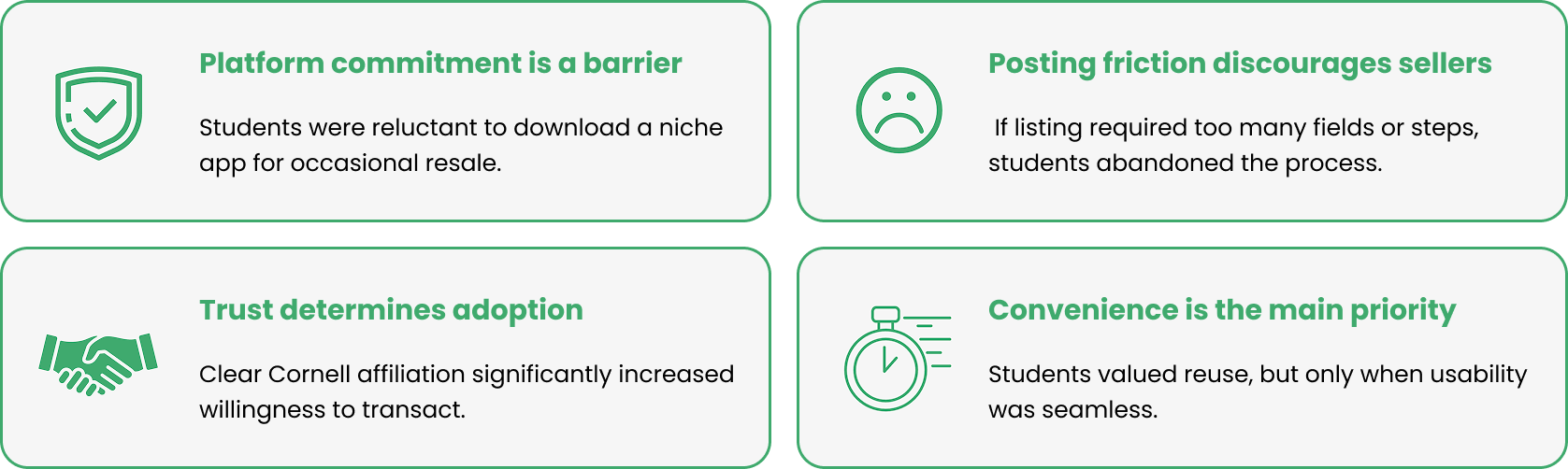
We conducted semi-structured interviews with Cornell students who had experience buying or selling second-hand items. We also distributed a short survey and analyzed usage patterns from the previous SWAPP iteration. Our goal was to uncover pain points in previous iterations while simultaneously exploring more generally how students operate when needing to resell unwanted items. We synthesized our findings into an affinity map, from which the following key insights emerged:
MARKET ANALYSIS
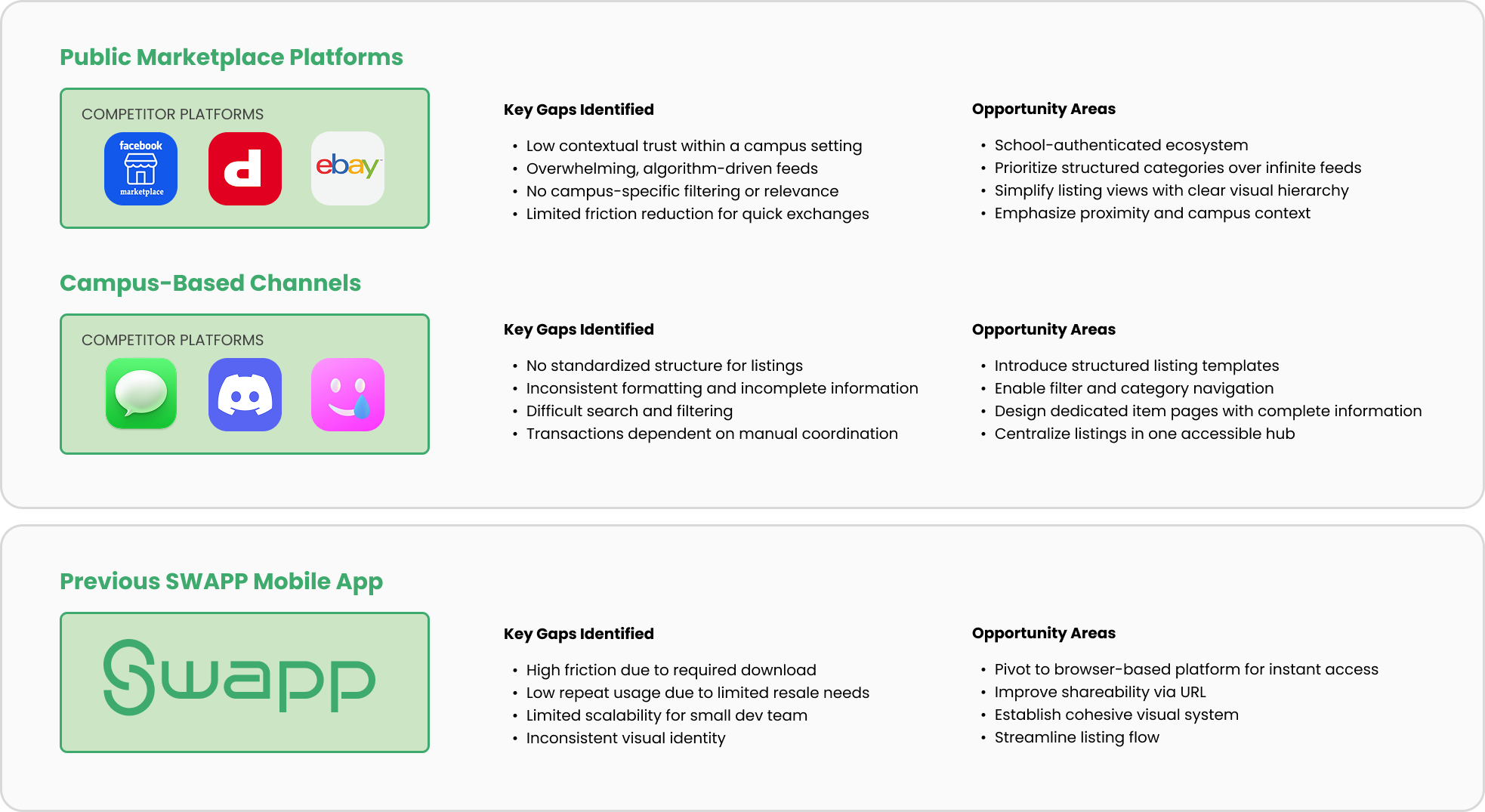
To inform our product strategy, we analyzed existing resale and marketplace platforms used by Cornell students, including Facebook Marketplace, Craigslist, Depop, and campus listservs. We also evaluated the previous SWAPP mobile app. This analysis surfaced structural and usability gaps that informed both our strategic pivot to web and our redesign priorities.
STRATEGIC PIVOT
transition from mobile app to web-based platform
The most critical insight was structural.
Students do not download apps for infrequent needs. Resale activity spikes during move-out and is often organized on desktop. Because these exchanges are seasonal and time-sensitive, students prioritize speed and accessibility over committing to a new app. A browser-based platform removes that barrier, enabling instant access and easier sharing during high-urgency periods.
By pivoting SWAPP to a web-based platform, we:
Removed download friction
Enabled immediate access via URL
Improved shareability
Reduced technical overhead
Allowed faster iteration cycles
LOW-FIDELITY EXPLORATION
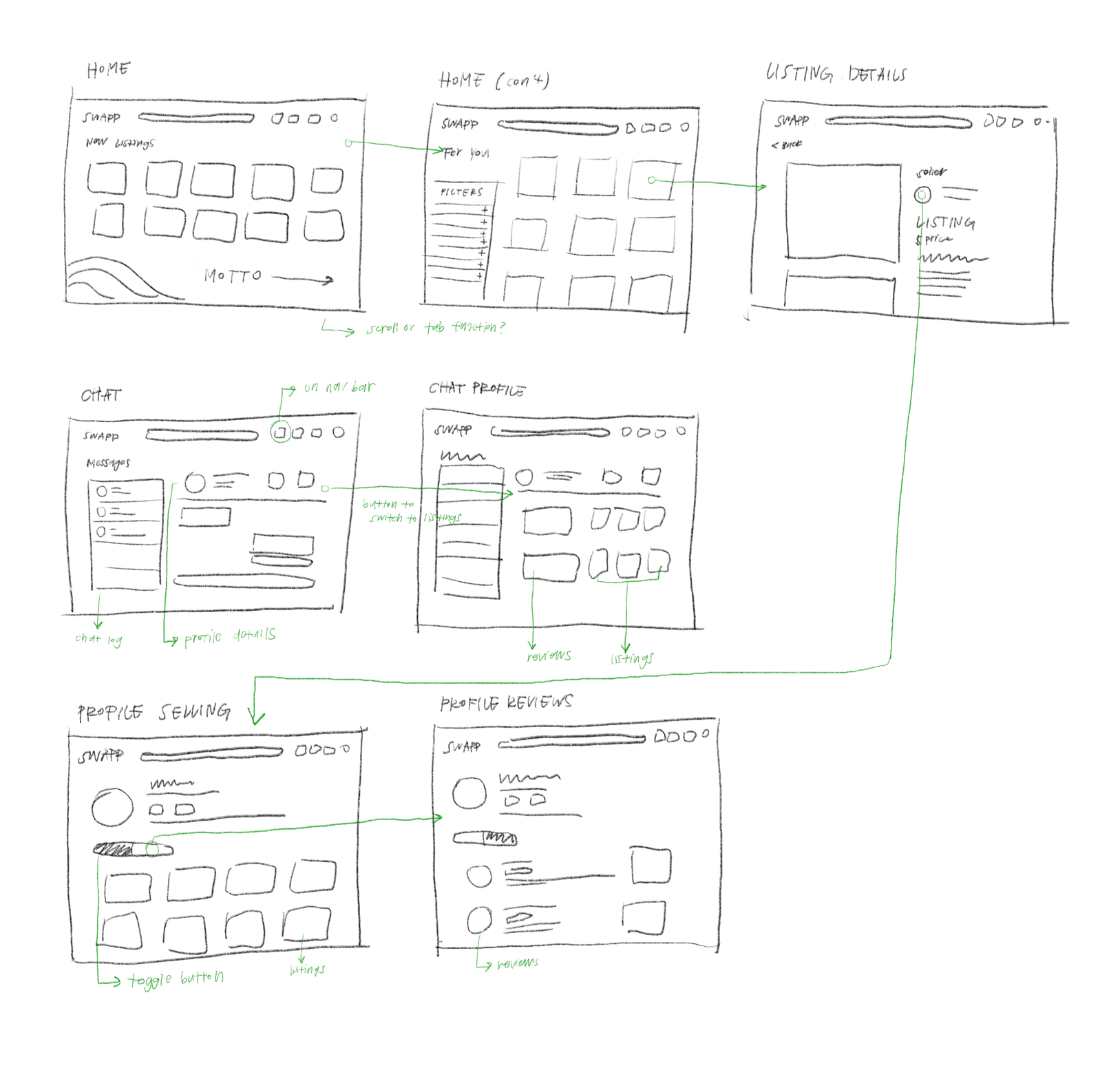
Through brainstorming and low-fidelity sketches, we mapped:
Seller journey from listing to pickup
Buyer browsing flow
Filter structure optimized for campus needs
Seller profile and reviews
Early wireframes focused on minimizing required inputs and prioritizing filter clarity.
User feedback revealed confusion around pickup logistics, leading us to introduce clearer status indicators and messaging.
KEY PAGE ITERATIONS
After sketching preliminary low-fidelity concepts, we transitioned into mid-fidelity wireframes to refine user flows and conduct usability testing. During this phase, I led the design of the home page, messaging page, and detailed product page, the primary touchpoints for buyers interacting with the platform. My priority was ensuring that core functions were clearly connected across pages, allowing users to move naturally from discovery to inquiry without confusion or unnecessary friction.
Home Page Iterations
When iterating on the SWAPP home page, I explored different approaches to category navigation and listing discovery. Because resale behavior on campus is largely intent-driven, the structure of navigation directly impacts speed, clarity, and trust. I narrowed the homepage exploration to the following three directions.
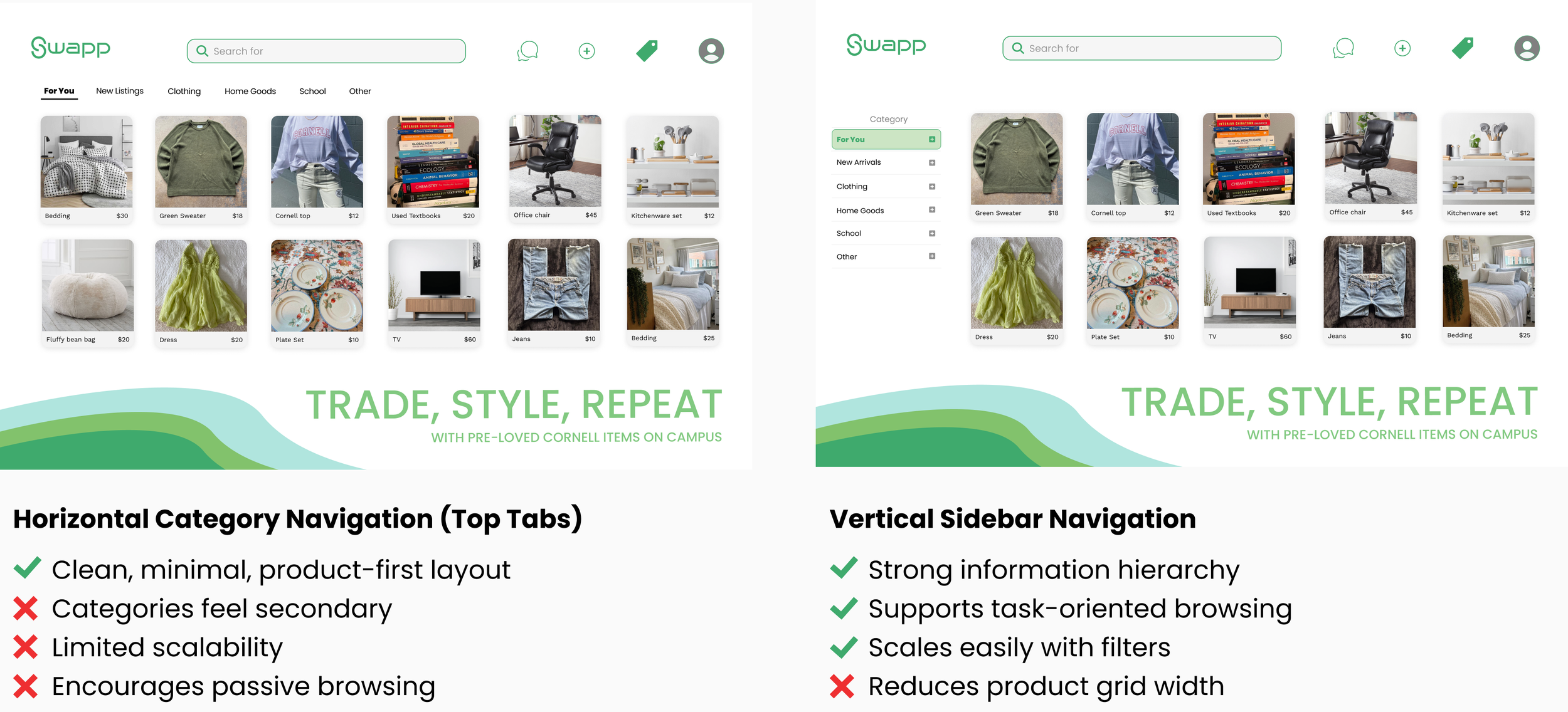
I ultimately selected the vertical sidebar navigation because it better aligned with how students actually approach resale on campus. User behavior is largely task-oriented, and students typically visit SWAPP with a specific item in mind rather than browsing casually. The sidebar establishes a stronger information hierarchy, making categories immediately visible and reinforcing structured navigation from the moment users land on the page.
Although the horizontal layout felt lighter and more product-forward, testing revealed that it encouraged passive scrolling and made categories feel secondary. The vertical structure reduced cognitive load by clearly separating navigation from content, increasing clarity and perceived legitimacy. Prioritizing usability and intent-driven browsing over aesthetic minimalism allowed the homepage to function as a more efficient and trustworthy entry point into the platform.
Chat Page Iterations
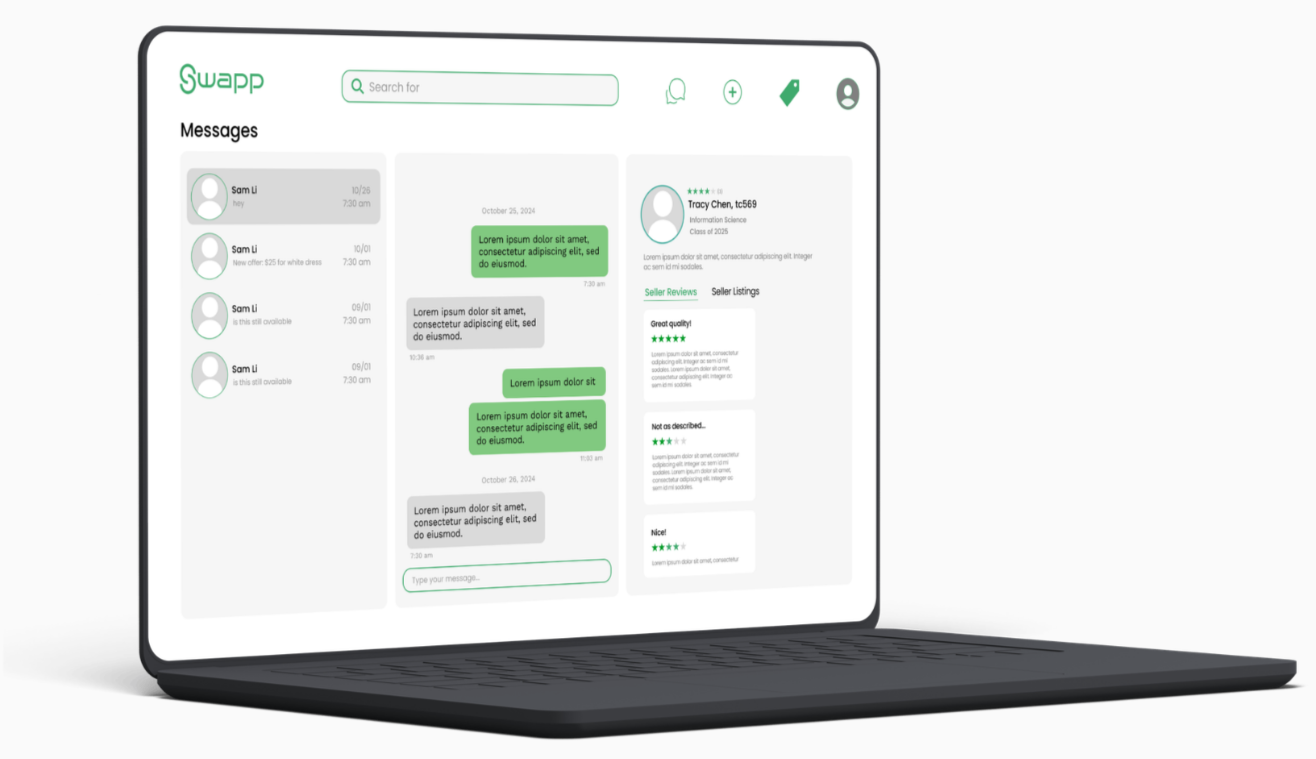
When designing the messaging experience, I explored different ways to balance conversational clarity with seller transparency. Because SWAPP interactions are transactional, the layout needed to support both seamless communication and visible trust signals.
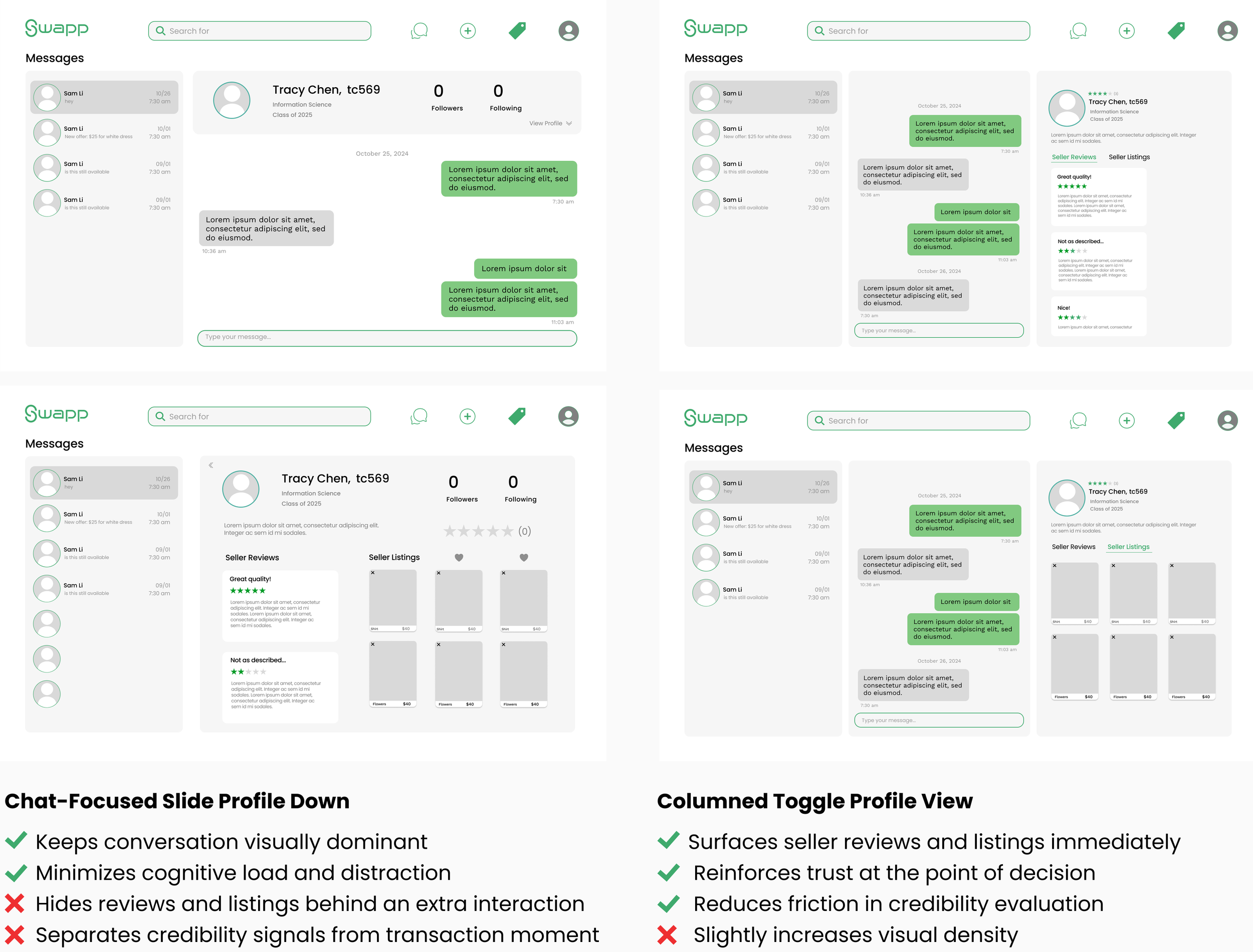
I ultimately chose the columned toggle profile view because trust and transparency are central to peer-to-peer resale. Unlike purely social messaging platforms, SWAPP conversations are transactional, and buyers need immediate access to seller reviews and active listings to make confident decisions. While the chat-focused layout felt cleaner, it concealed critical credibility signals behind an extra step. By surfacing trust indicators alongside the conversation, the columned view better supports informed decision-making and reinforces the platform’s legitimacy at the moment it matters most.
Product Detail Page Iterations
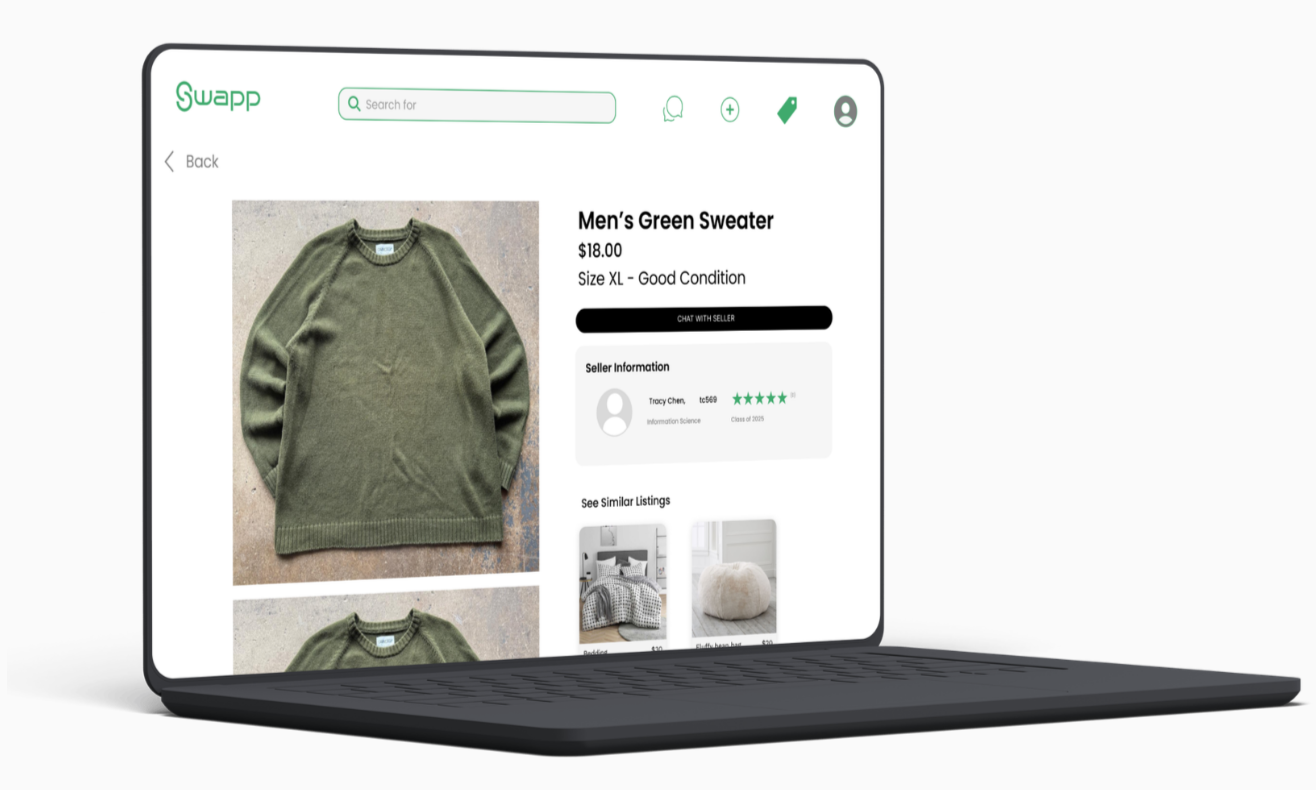
When designing the product detail page, I explored whether seller credibility or product information should take visual priority. Because peer-to-peer resale relies on both trust and clarity, the hierarchy of this page directly impacts purchase confidence.
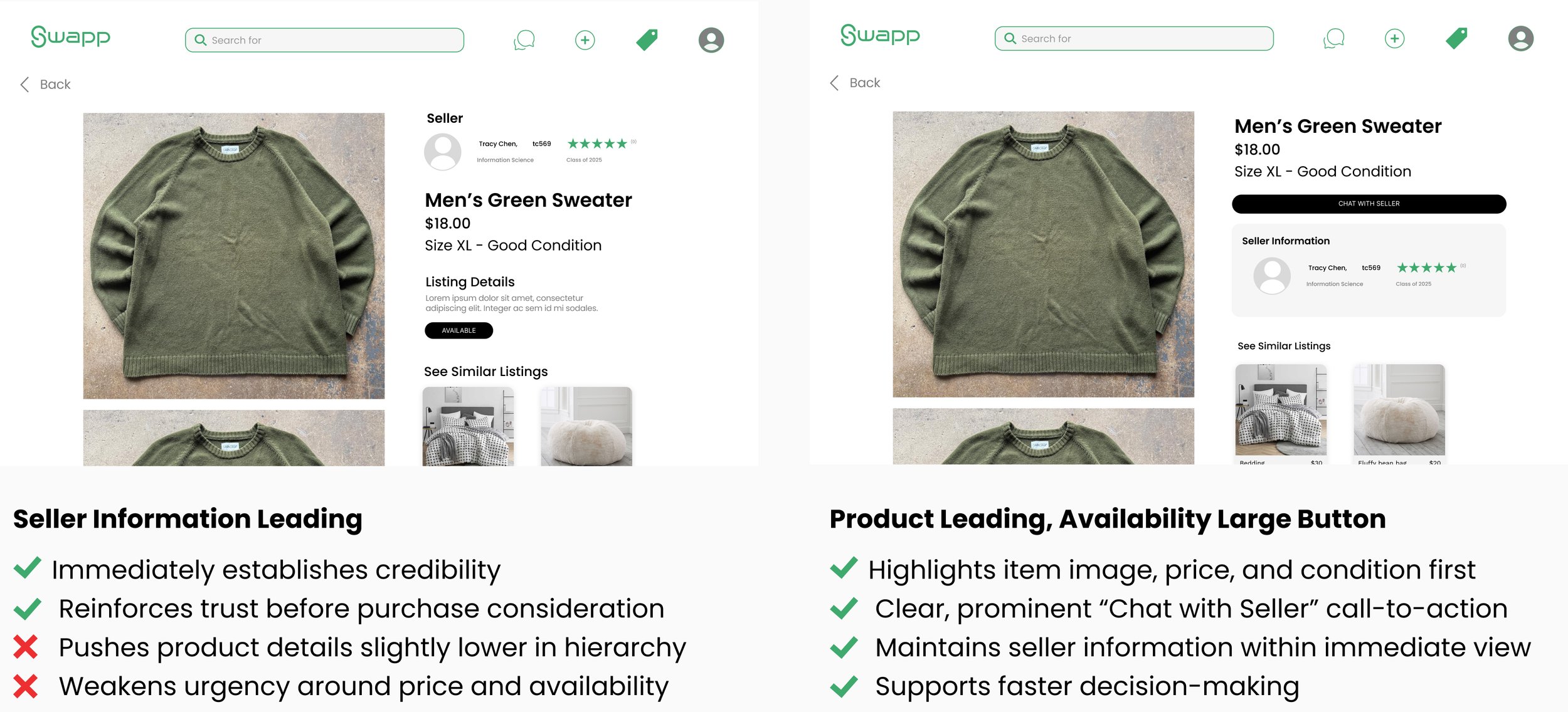
I ultimately chose the product-leading layout because buyers first evaluate the item itself (its price, condition, and availability) before committing to seller interaction. While trust remains critical, placing the product image and call-to-action at the top supports clearer decision flow and reduces hesitation. By keeping seller information visible but secondary, the final layout balances transparency with urgency, aligning more closely with real purchase behavior.
FINAL DESIGNS
After research-driven iteration and strategic restructuring, we present the final web-based SWAPP platform!
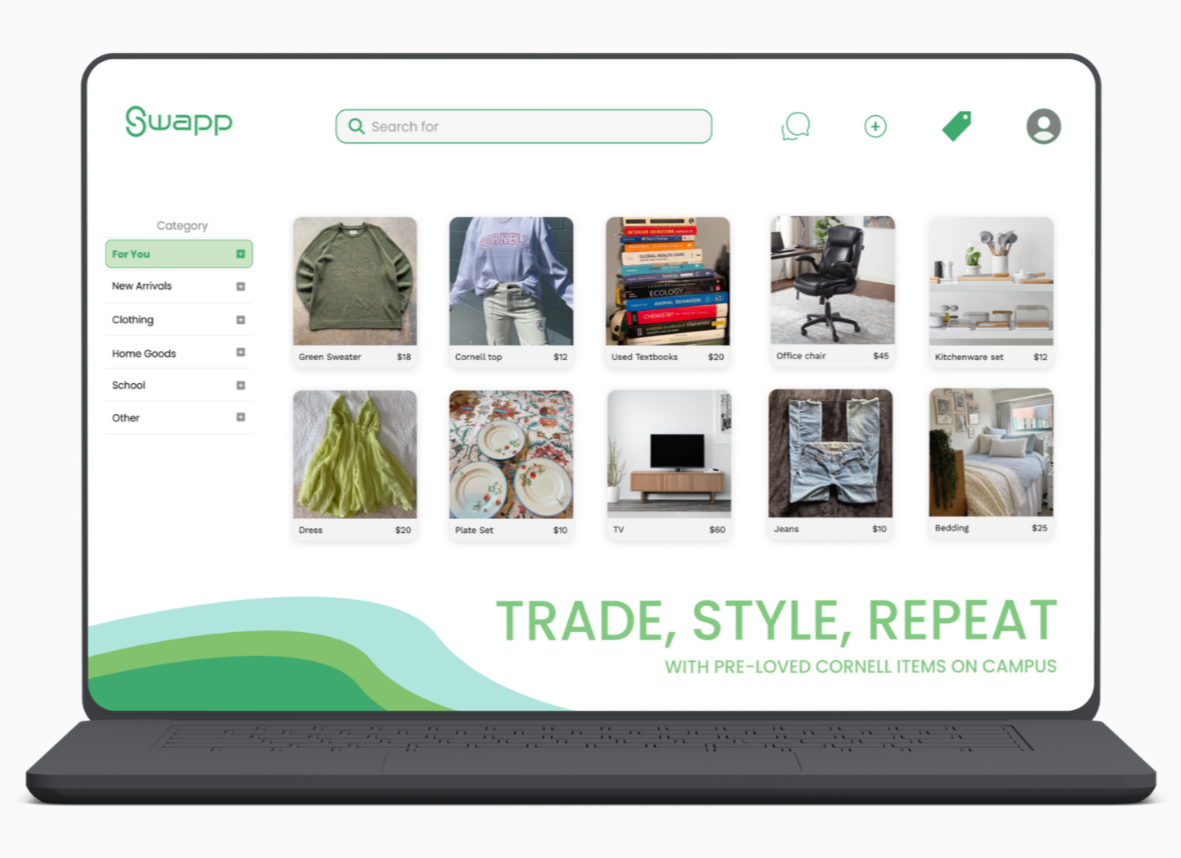
Designed for Fast, Intent-Driven Discovery
SWAPP enables students to quickly find what they need without relying on passive scrolling. Structured navigation and clear categorization support goal-oriented browsing, especially during high-urgency periods like move-out.
By aligning the platform with real campus behavior, SWAPP transforms resale from a chaotic search into a focused, efficient experience.
Integrating Trust Into Communication
Rather than separating conversation from credibility, SWAPP integrates seller reputation directly into the messaging experience. This keeps trust visible throughout the interaction while maintaining conversational clarity.
By surfacing transparency where decisions happen, the platform reinforces legitimacy and accountability.
Built for Confident Transactions
Peer-to-peer exchange depends on trust. SWAPP embeds transparency directly into the purchase journey, ensuring users can evaluate both the product and the seller without friction.
Clear pricing, condition visibility, and accessible credibility signals reduce uncertainty and support informed decision-making.
REFLECTION
Building clarity through structure and strategy.
Leading SWAPP through the app-to-web transition reshaped how I think about product design. The most impactful decision was not visual, but structural: aligning the platform format with real user behavior. I learned that reducing friction before interaction is often more powerful than refining aesthetics alone.
Designing for trust in transactional systems.
This project deepened my understanding of how hierarchy, transparency, and information placement directly influence user confidence. Measuring success meant tracking engagement growth, usability feedback, and reduced navigation confusion during testing. It reinforced that in peer-to-peer platforms, trust visibility is as important as usability.
Refining the foundation.
Now that the structural groundwork is set, I would refine visual consistency, spacing systems, and microinteractions to elevate polish and brand distinctiveness. Additional opportunity areas include in-platform messaging enhancements, seasonal surge optimization during move-out, lightweight rating systems, and analytics dashboards to track conversion and listing success rates.
Looking forward.
SWAPP has the potential to grow into a campus-wide circular exchange ecosystem, integrating impact tracking, donation pipelines, or sustainability metrics to visualize waste diverted. This experience taught me that strong products evolve iteratively, and that clarity, trust, and behavioral alignment are the foundations of scalable design.